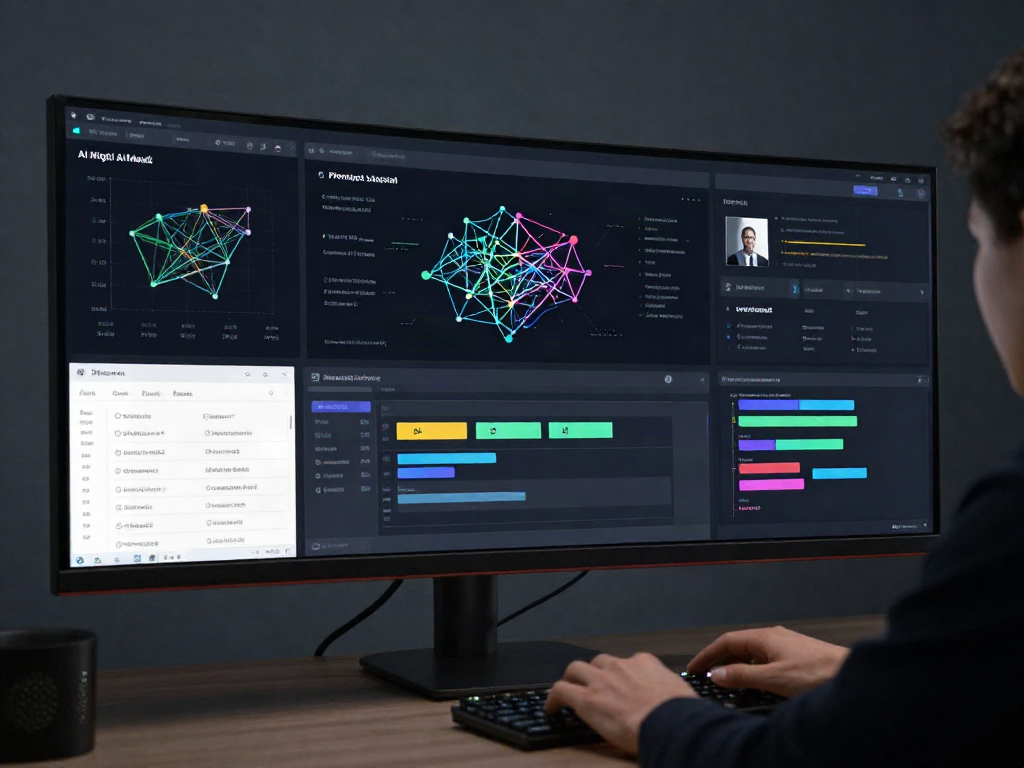
No evidence pack names a deployed parking robot, its price, or a measured result. That means a ranked list would pretend to know more than the facts support. A useful watchlist can still show which technical changes would matter to a parking operator.
Quick read
- Watch robots that move cars without a person inside them.
- Check how the system handles tight spaces, blocked routes, and people nearby.
- Treat charging, recovery, and insurance as part of the robot, not side details.
Moving cars without a driver
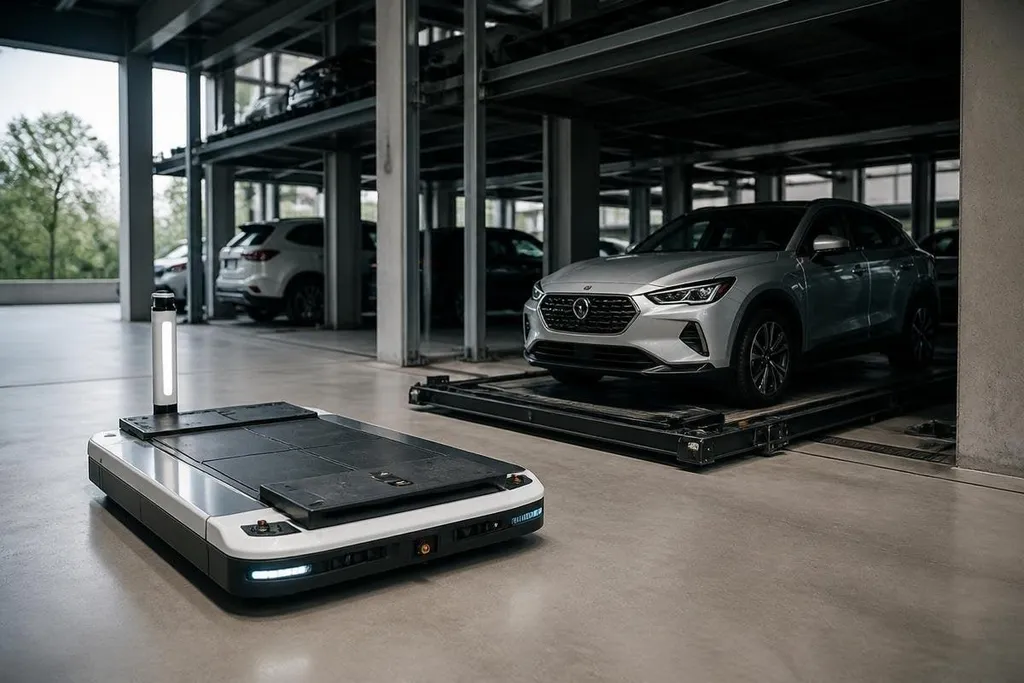
The clearest area to watch is automated valet parking. A driver leaves a car in a marked handoff area, then software assigns a robot or an autonomous vehicle to a parking space. The car moves again when the driver asks for it.
That process only helps if the car can travel through the garage without a person correcting it. The system needs cameras, depth sensors, or LiDAR to read walls, ramps, parked cars, and people. It also needs a map that stays useful when a space is blocked or a route changes.
Parking garages create a hard test.
Floors may be narrow, lighting can change between levels, and a vehicle may need to pass a car that has stopped in the lane. A system that works only on an empty test floor has not shown enough.
Before a garage owner counts saved floor area, the report should name the parking robot, garage, vehicle type, test date, and human fallback. Robot 24 can put those facts beside the result before the next section looks at how these systems use limited space.
Better use of limited space
Parking robots can also change how a garage uses its floor area. A human driver needs room to open doors, walk around the car, and turn into a space. A robot that places cars with repeatable movements may work with smaller gaps.
That gain has a clear limit. The garage still needs safe paths for people, fire access, emergency work, and vehicle recovery. A design that adds more parked cars but makes a damaged vehicle hard to reach has traded one problem for another.
The useful measure is not the number of cars shown in a drawing. It is the number of cars the site can accept, store, and return during its busiest period. Operators should ask for measured entry and retrieval times, not a promise about capacity.
Recovery matters more than the demo
A parking robot will meet objects its map does not contain. A delivery cart may block a lane. A driver may stop in the wrong place. A sensor may collect dirt or lose a clear view.
The system needs a safe recovery plan for each case. It may stop the vehicle, ask a remote operator for help, or send a person to the garage. Each choice affects staff costs and the time a customer waits.
A remote operator can help several vehicles, but the supplier must state how many. It should also report how often people step in during normal work. Without those figures, the level of autonomy remains unproven.
The same rule applies to faults. A dead battery, a failed sensor, or a blocked exit should lead to a known action. Staff need a way to move the car and return the system to service without taking apart the garage.
Charging, safety, and ownership
Parking robots need a place to charge, yet the parking space is also the product being sold. A site may need charging bays, spare batteries, or a fixed schedule that keeps enough robots ready for demand.
Safety adds more questions. The operator should ask how the robot detects a person, how it stops, and what happens after a power loss. The answers should name the sensors, the stop behavior, and the inspection work.
Ownership costs reach beyond the robot. A buyer may pay for garage changes, network service, remote help, maintenance, and insurance. A low purchase price can lose its value if the site needs major building work or staff for every recovery.
A buyer's watchlist
Use these checks when a supplier presents a new parking system:
- Live site: Ask where the system runs with paying customers and how long it has operated there.
- Measured work: Request entry time, retrieval time, vehicles handled per hour, and remote-assistance rate.
- Garage fit: Check ramp grades, lane width, floor markings, lighting, and the size range of supported cars.
- Failure plan: Ask who moves a car after a sensor fault, blocked lane, network loss, or power cut.
- Full cost: Price construction changes, charging, service, insurance, staff, and software over one year.
- Exit plan: Confirm how the garage works if the robot system stops operating.
I'd wait for public results from a live garage before calling any parking robot a breakthrough. The useful proof is a dated operating record with retrieval times, intervention rates, safety events, and total cost.
Until suppliers publish those figures, watch the recovery process as closely as the parking move. A robot that parks one car neatly is a demo; a system that keeps the garage working after the first blocked lane is the result worth measuring.