
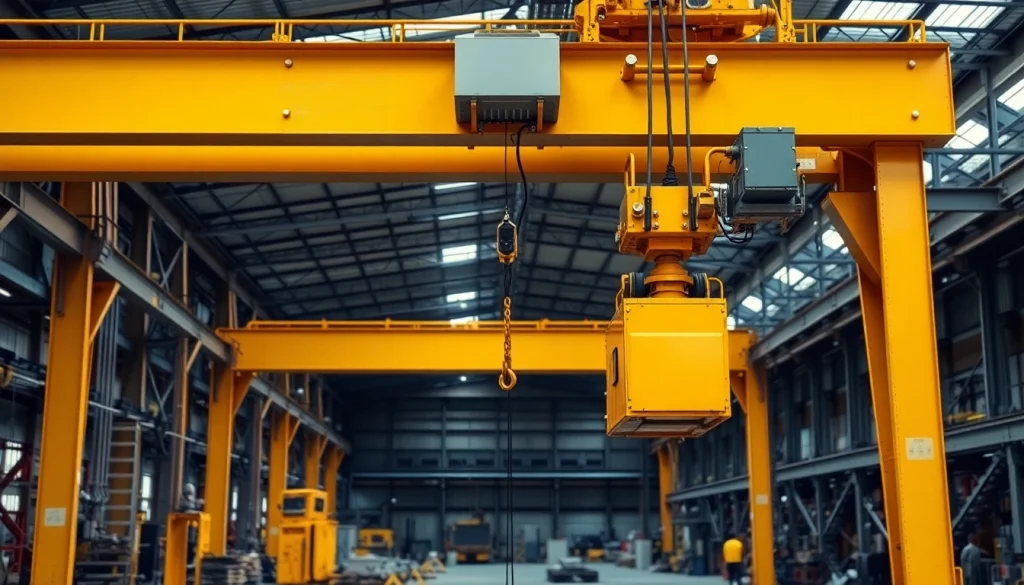
Understanding the Double Girder Bridge Crane
The double girder bridge crane is an essential component in modern industrial operations, known for its enhanced efficiency and superior load-handling capabilities. Utilizing two parallel girders, this crane design offers significant advantages over its single girder counterparts, making it a preferred choice for various applications in manufacturing, logistics, and construction sectors. When exploring options, the double girder bridge crane provides comprehensive insights into the benefits and features that align with heavy lifting needs.
What is a Double Girder Bridge Crane?
A double girder bridge crane consists of two main girders running parallel to each other, which supports a hoist that can traverse the full span of the bridge. This configuration allows for greater lifting capacities and spans compared to single girder designs. Typically, these cranes are mounted on overhead runways, allowing for smooth and efficient horizontal movement of heavy materials.
Key Components of Double Girder Bridge Cranes
- Main Girders: The primary structure that supports the entire crane system.
- End Trucks: Connect the girders to the runway and facilitate movement along the track.
- Hoist Mechanism: The device that lifts and lowers loads, usually equipped with a trolley for lateral movement.
- Control Systems: Allow operators to manage crane functions safely and efficiently, often incorporating wireless technology.
Advantages Over Single Girder Designs
Double girder cranes provide several advantages that make them a superior choice for heavy lifting operations. These include:
- Increased Load Capacity: Double girder cranes can handle heavier loads due to their robust structure.
- Wider Span: They can cover larger distances without the need for additional support, making them ideal for spacious warehouses and production lines.
- Enhanced Stability: The design ensures better balance and stability while lifting, reducing risks associated with load tipping.
- Greater Hook Height: The hoist can be positioned higher, allowing for improved vertical clearance and more efficient use of workspace.
Applications of Double Girder Bridge Cranes
Industrial Uses and Benefits
Double girder bridge cranes are widely utilized in various industries, including steel manufacturing, automotive assembly, and shipping. Their ability to lift heavy loads with precision and efficiency makes them indispensable in environments where safety and reliability are paramount. They are especially valuable in:
- Aerospace Manufacturing: Handling complex components that require precise positioning.
- Construction Sites: Lifting heavy beams and materials for building frameworks.
- Warehousing: Streamlining the movement of bulk materials and finished products.
Case Studies: Successful Implementations
Numerous companies have successfully implemented double girder bridge cranes to optimize their operations:
- Manufacturing Plant: A major automotive manufacturer utilized a double girder crane to streamline assembly lines, reducing cycle times by 20%.
- Shipping Facility: A logistics company integrated these cranes into their workflow, improving load handling efficiency by 30% and significantly enhancing shipping timelines.
- Construction Projects: Large infrastructure projects have benefited from the increased stability and load capacities provided by double girder cranes, resulting in safer work environments and improved project completion rates.
Choosing the Right Crane for Your Business Needs
When selecting a double girder bridge crane, businesses must consider various factors including load capacity, span length, and operational speed. It is essential to assess the specific requirements of your operations to determine the most suitable crane configuration. Consulting with experts in crane manufacturing can provide insights into the best options for your unique challenges.
Technical Specifications and Features
Load Capacities and Span Measurements
One of the defining features of double girder bridge cranes is their impressive load capacities, which typically range from 10 tons to over 250 tons. Span measurements can vary, with many models able to cover distances from 20 feet to over 150 feet. It’s crucial for companies to evaluate their maximum load requirements and desired span to select the appropriate model that matches their operational needs.
Safety Features and Compliance Standards
Safety is a critical aspect of crane operations, and double girder cranes are equipped with multiple safety features to ensure the protection of operators and materials. These features include:
- Overload Protection: Prevents lifting excessive loads that could cause structural damage.
- Emergency Stop Controls: Allows operators to stop the crane quickly in case of an emergency.
- Limit Switches: Automatically halt the crane at predefined points to prevent accidents.
- Compliance with Standards: Most cranes adhere to the American National Standards Institute (ANSI) and Occupational Safety and Health Administration (OSHA) standards.
Innovative Technologies in Modern Cranes
The evolution of technology has significantly enhanced the capabilities of double girder bridge cranes. Innovations such as integrated sensors and IoT connectivity allow for real-time monitoring of crane performance and conditions. These advancements facilitate predictive maintenance, enabling organizations to address potential issues before they escalate.
Maintenance and Best Practices
Routine Maintenance Essentials
To ensure the longevity and reliability of double girder bridge cranes, routine maintenance is paramount. Key activities include:
- Regular inspections of hoist mechanisms and electrical systems.
- Lubrication of moving parts to reduce wear and tear.
- Calibration of control systems for precision handling.
- Assessment of safety features to confirm operational efficacy.
Troubleshooting Common Issues
Maintaining an effective troubleshooting guide can be instrumental in minimizing downtime. Common issues may include:
- Electrical failures often require immediate attention to restore functionality.
- Wear and tear on hoisting components that need timely replacement.
- Mobility issues due to debris or environmental factors affecting movement.
Extending the Lifespan of Your Crane
Implementing best practices for maintenance not only enhances the safety of operations but also extends the lifespan of double girder bridge cranes. Regular training for operators on optimal usage techniques and safety protocols is essential in preserving the integrity of these machines.
The Future of Double Girder Bridge Cranes
Emerging Trends in Crane Technology
As industries evolve, double girder bridge cranes are set to become even more sophisticated. Emerging trends include enhanced automation, utilizing AI for load management, and improved energy efficiencies. These trends are driven by the need for greater operational efficiency and reduced environmental impact.
Impact of Automation on Crane Operations
The integration of automation into crane systems is revolutionizing how businesses operate. Automated cranes can perform tasks with precision, reducing the need for manual intervention. This not only enhances productivity but also minimizes human error, thereby improving safety standards in the workplace.
Predictions for the Heavy Industry in 2025
Looking towards 2025, advancements in double girder bridge crane technology will likely focus on sustainability, efficiency, and safety. Heavy industries will increasingly adopt innovative solutions that align with regulatory standards and the growing demand for eco-friendly operations, paving the way for smarter and more versatile lifting systems.